dbbeats For Me Buds 2 brings local sleep sensing to slimmer earbuds
dbbeats For Me Buds 2 is a sleep earbud with in-ear PPG, adaptive sound and a companion app. Its new angle is a slimmer side-sleep design plus a split local-AI setup: the buds read signals, while AI Sleep Chat runs on the phone.
Product changes
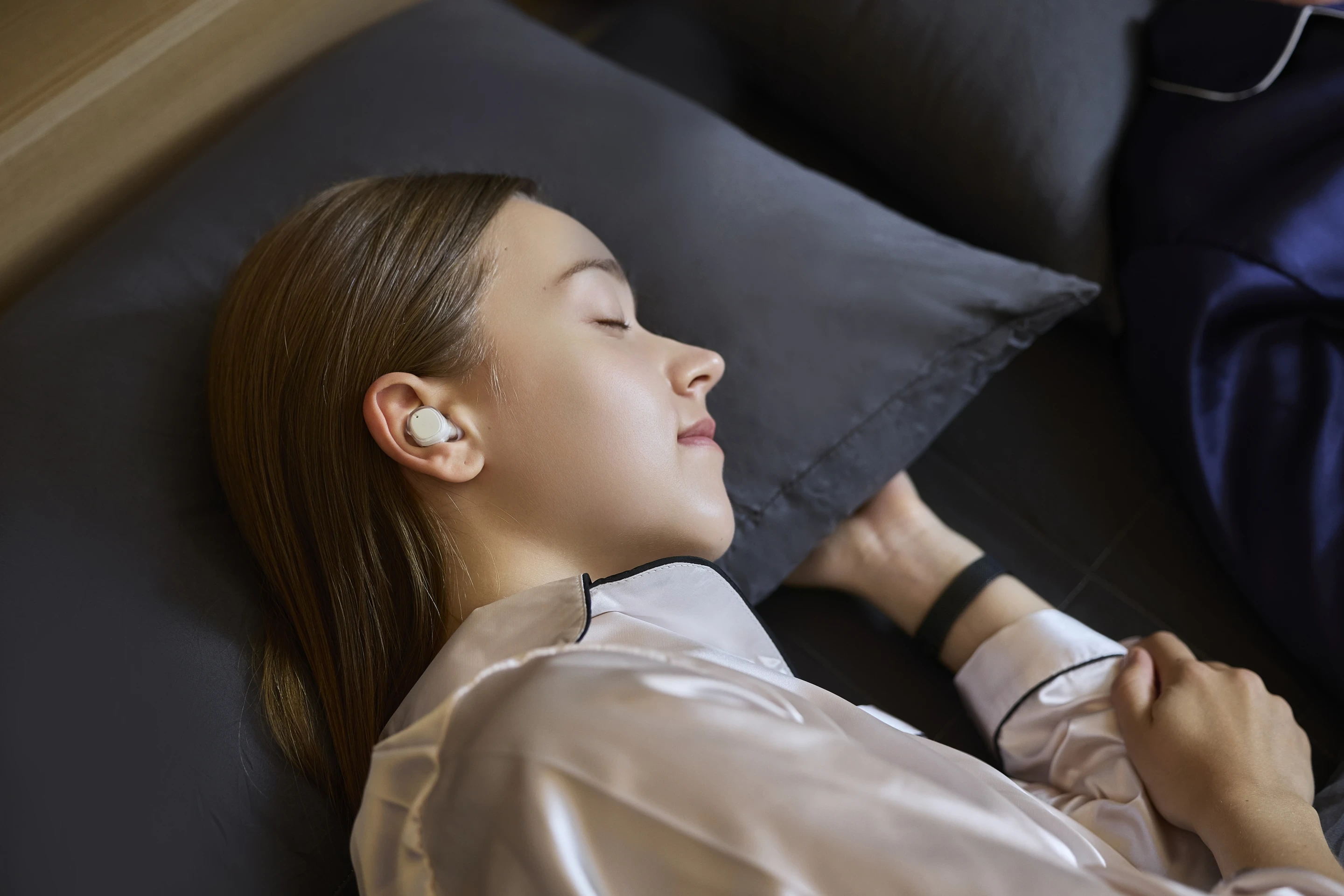
The New Atlas report describes For Me Buds 2 as a second-generation sleep earbud shaped around side sleeping. Each bud is 10.4 mm thick and under 4 g, with soft ear tips and wings intended to reduce pressure against a pillow. Its noise strategy combines up to 35 dB hybrid ANC, passive sealing and adaptive sound masking.
A built-in PPG sensor reads heart rhythm overnight. New Atlas says dbbeats processes biometric signals locally and adjusts sleep sounds in real time. The companion app presents sleep stages, duration, snoring events, heart rate and HRV, while AI Sleep Chat lets users ask about their own data.
Real situations and what AiDaX is watching
For a light sleeper sharing a room, the appeal is a quieter night without treating the earbuds as a simple white-noise player. A slimmer form may matter most to people who sleep on their side, while adaptive sound gives the product a reason to sense signals instead of only reporting them the next morning.
AiDaX is watching the division between the hardware and the phone. dbbeats’ Kickstarter page says the earbuds analyze biometric signals, while adaptive sound and AI Sleep Chat run locally on the phone. The claim is a vendor description, not an independent privacy audit or a guarantee of better sleep.
Product stage and boundaries
The project is in crowdfunding. Kickstarter lists prototype refinement, design validation, production testing and pilot production before mass production, so a campaign is not the same as an available product. Its page also describes offline use after the initial model download, with no login, cloud processing or server storage claimed for the core experience.
That boundary matters: “on-device AI” here does not mean every AI feature runs inside the earbuds. Snoring analysis uses the phone microphone, and health-related claims remain product messaging rather than diagnosis or treatment. Delivery, certification and production risks also remain part of the hardware campaign.