Arrowspace S1 uses AI vision to find the right screwdriver bit
Arrowspace S1 pairs a camera-equipped electric screwdriver with a smart bit case. Its companion phone app identifies screw types and sizes locally, then lights the matching bit slot and recommends torque. The kit is crowdfunding; recognition accuracy, production hardware and delivery remain to be verified.
Product changes
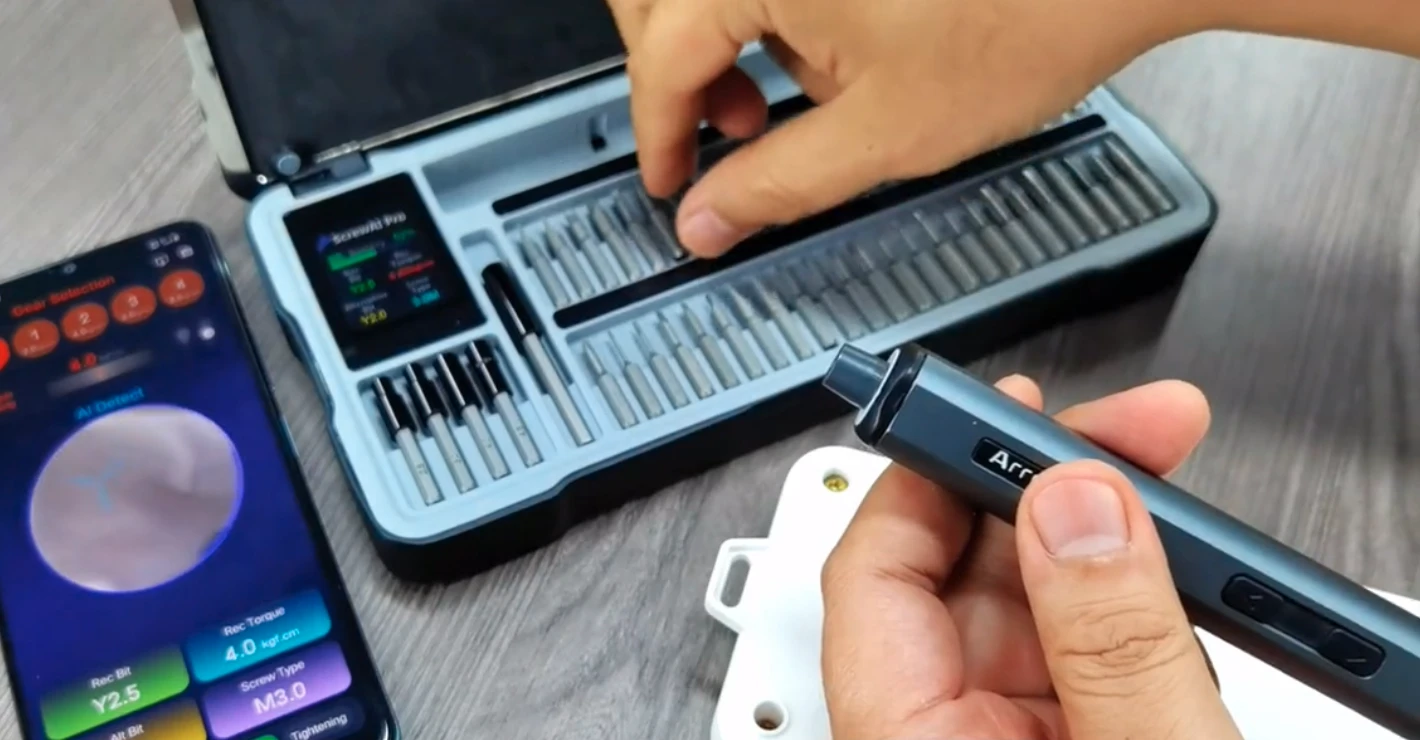
Arrowspace S1, from the team behind Arrowmax, adds visual guidance to a precision electric screwdriver. As New Atlas reports, a rear camera reads the screw while a retractable contact probe helps establish the focusing distance. The paired case then lights the matching bit slot.
The kit holds 52 bits and displays recognition results on its case. It can also recommend a torque setting. Users still select and fit the bit and hold the driver steady: this is an assisted repair workflow, not an autonomous disassembly robot.
Real situations and what AiDaX is watching
Tiny screws in eyewear, drones or game consoles can be hard to distinguish by sight. Connecting a recognition result to a physical storage slot is more immediate than asking someone to interpret another size label. AiDaX is interested in that specific reduction in trial and error, rather than a conversational interface added for novelty.
The official campaign says images travel over a local connection to a companion phone app for recognition, without cloud uploads. Only recognition relies on AI. Local inference here means the phone, not a model running inside the screwdriver.
Product stage and boundaries
As of October 28, S1 is crowdfunding on Kickstarter. The team describes its pictured devices as functional prototypes, with possible production changes. A pledge is not an in-stock purchase or a delivery guarantee. This article retains the report’s October 27 publication date.
Recognition accuracy and torque recommendations need independent testing. The campaign itself notes that safe torque also depends on the fastener, material and application. Repairers must check the setting against equipment specifications; automatic guidance is not a promise that delicate parts cannot be damaged.